AI chatbots have come a long way. The good ones now answer questions accurately, in your tone of voice, around the clock. The bad ones still frustrate customers. Here’s what separates them.
What AI chatbots do well
- Answering repeat questions: opening hours, prices, delivery times, returns.
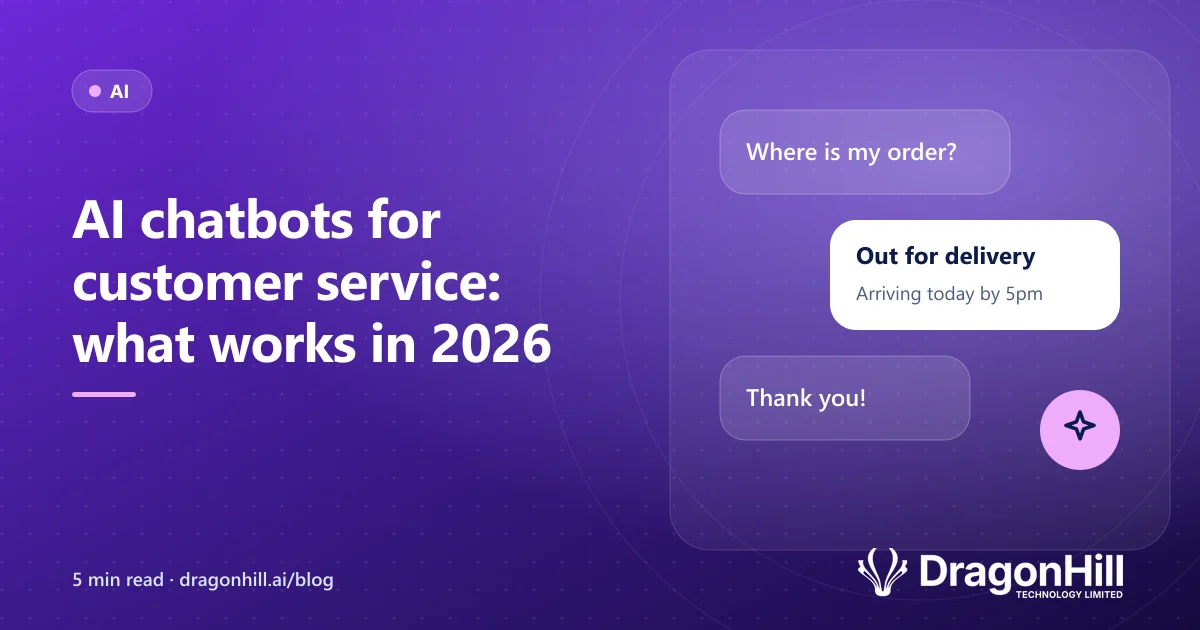
- Order and booking status: “Where is my order?” “When is my appointment?”
- Capturing leads out of hours, with the details your team needs to follow up.
- Booking appointments straight into your calendar.
Where they go wrong
- Answering from general knowledge instead of your own information, which leads to wrong answers.
- No way to reach a person when the question is complex or the customer is upset.
- Trying to do everything instead of a few jobs well.
How to set one up properly
- Train it on your own information: FAQs, policies, price lists and product details.
- Limit it to what it knows. If it isn’t sure, it should say so and offer a person.
- Make handover easy, with the conversation passed on so the customer doesn’t repeat themselves.
- Connect it to your systems, such as Shopify, your booking tool or CRM, so it can check real orders and bookings.
- Review conversations regularly and improve the answers.
Chatbot or AI agent?
A chatbot answers questions. An AI agent can also do things, such as processing a return or updating an order, with a person approving anything important. Read what is an AI agent? for the difference, and 10 admin jobs an AI agent can take on for more examples.
Keep customer data safe
A customer-facing chatbot handles personal information. Make sure it uses business-grade AI that doesn’t train on your data. Our checklist is your data safe with AI? covers the questions to ask.
Want a chatbot that actually helps your customers? We build customer-facing AI trained on your own information. See our AI solutions or discuss your AI agent.