The biggest risk in a software project isn’t technology. It’s finding out at the end that what was built isn’t quite what you needed. Agile two-week sprints solve that by showing you working progress all the way through.
What is a sprint?
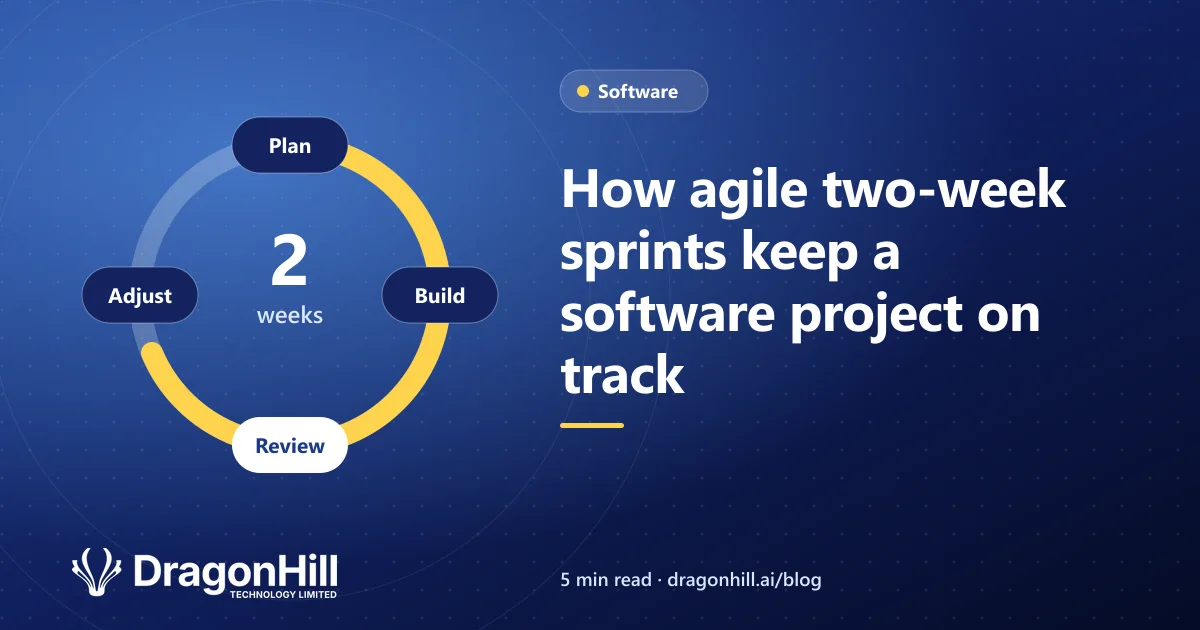
A sprint is a short, fixed block of time, usually two weeks, in which the team builds and tests an agreed set of work. Each sprint ends with a review, and the next one begins, shaped by your feedback.
A typical two-week sprint
- Day 1, plan. Agree the goals for the sprint together.
- Days 2–9, build. The team builds and tests the agreed work.
- Day 10, review meeting. You see working progress and help decide what’s next.
What happens in the review meeting
- A demo of working software, not just a status report.
- What’s done and what’s next, in plain English.
- Your feedback, so priorities can change early.
- An honest view of the timeline against your deadline.
Why it works better
| Traditional project | Agile two-week sprints |
|---|---|
| You see the result at the end | You see progress every two weeks |
| Changes are expensive late on | Changes fit into the next sprint |
| Problems surface late | Problems surface early |
| Little involvement after sign-off | Regular, short check-ins |
Agile with a fixed quotation
Agile doesn’t mean open-ended. You can still agree scope, price and deadline in writing; see what a software quotation should include. Sprints change how you see progress and handle change, not whether you have a budget.
Related reading
This is how we work. Every project after kick-off runs in two-week sprints with a review meeting every two weeks. Read more on how we work, or see our custom software development service.